What is a whole grain?
Whole grains are actually the seeds of grasses that are cultivated for food. Unlike refined grains, which have been milled to remove outer layers and produce a smoother finish, whole grains are consumed, well, whole! Whole wheat and brown rice are probably the most common examples, but other foods that are considered whole grains include: bulger, steel-cut oats, rolled oats, millet, quinoa, popcorn and wild rice.
Why whole grains?
The 2010 Dietary Guidelines for Americans recommends that at least half the grains we eat be whole grains, and given the health benefits, it's easy to see why! According to the Harvard School of Public Health, "Eating whole instead of refined grains substantially lowers total cholesterol, low-density lipoprotein (LDL, or bad) cholesterol, triglycerides, and insulin levels." Whole grains may also reduce the risk of developing type 2 diabetes and improve digestive health.
What can we cook?
The possibilities are practically endless! The Mayo Clinic has these tips for incorporating more whole grains into your diet:
- Enjoy breakfasts that include whole-grain cereals, such as bran flakes, shredded wheat or oatmeal.
- Substitute whole-wheat toast or whole-grain bagels for plain bagels. Substitute low-fat bran muffins for pastries.
- Make sandwiches using whole-grain breads or rolls. Swap out white-flour tortillas with whole-wheat versions.
- Replace white rice with kasha, brown rice, wild rice or bulgur.
- Feature wild rice or barley in soups, stews, casseroles and salads.
- Add whole grains, such as cooked brown rice or whole-grain bread crumbs, to ground meat or poultry for extra body.
- Use rolled oats or crushed bran cereal in recipes instead of dry bread crumbs.
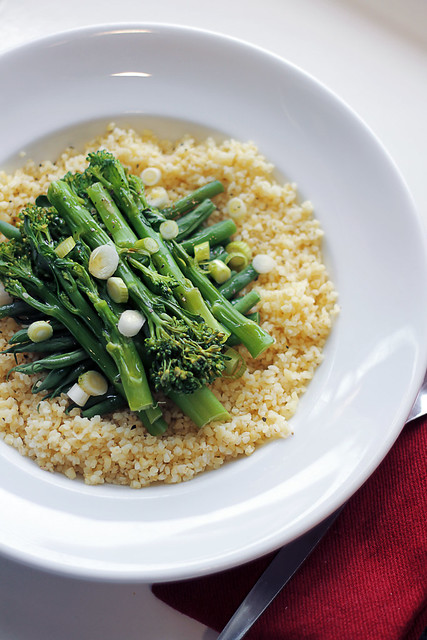 |
| Green Beans, Broccoli, and Bulger - saladpride.blogspot.com |
 |
| Quinoa-Stuffed Artichokes, healthybitesfood.wordpress.com |
And don't forget about the possibilities for baking...
 | |||
| Honey Oat Quick Bread, eatingwell.com |


No comments:
Post a Comment